MUNICH, Germany — November 2026 — From November 10 to 13, Dapu Technologies, a global leader in time-frequency and high-performance signal chain solutions, marked its 16th consecutive appearance at electronica 2026 at the Trade Fair Center Messe München. Under the theme "Precision Timing for an Intelligently Connected World," Dapu showcased a comprehensive portfolio spanning core components, ICs, and system-level solutions tailored for AI data centers, 6G and satellite communications, smart devices, and automotive electronics.
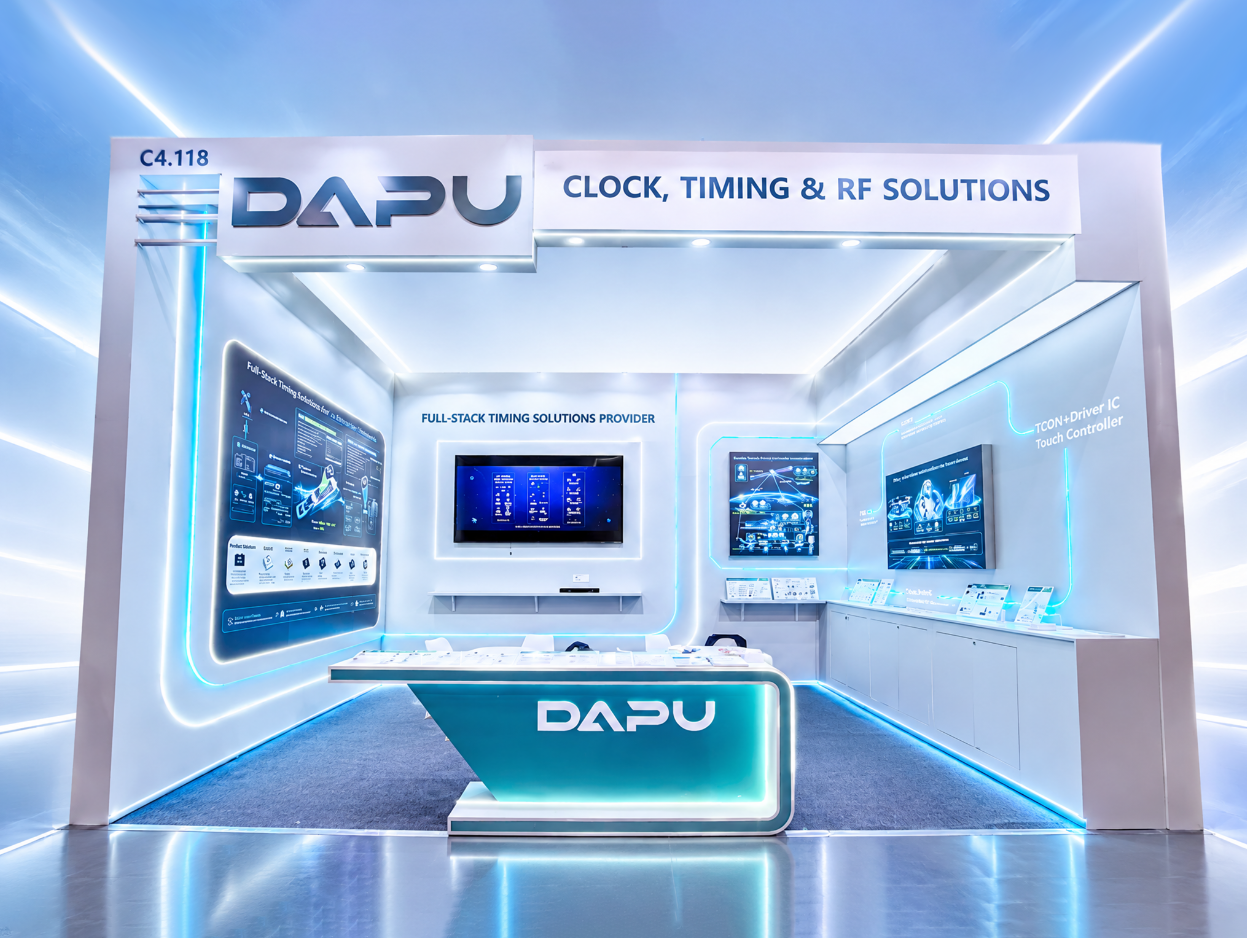
Debut in Human-Machine Interaction: Expanding the Boundaries of Smart Devices
As edge AI drives smart hardware toward sleeker, more intelligent form factors, Dapu Technologies made its debut in human-machine interaction (HMI) technologies while unveiling next-generation timing solutions designed for compact end-devices.
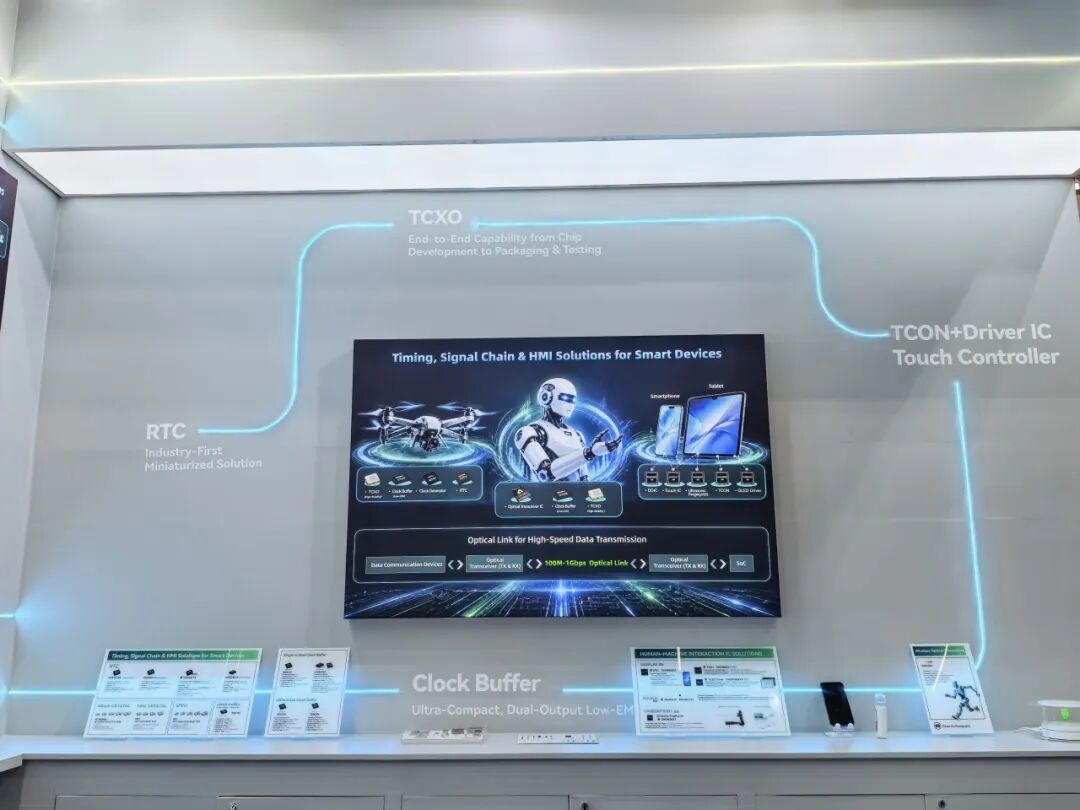
Engineered for highly integrated applications such as drones and handheld cameras, the new INS8214A clock generator integrates a Fractional-N PLL to deliver multi-channel, low-jitter clock outputs, offering pin-to-pin and functional compatibility with mainstream international PCIe clock generators. Meanwhile, targeting AI glasses and smart wearables, the INS5T8112 real-time clock (RTC) combines an ultra-compact 2.0 × 1.6 mm package with an ultra-low current consumption of 250 nA, overcoming critical board-space and battery-life constraints.
16 Years of Innovation: Powering 6G Evolution and AI Compute Infrastructure
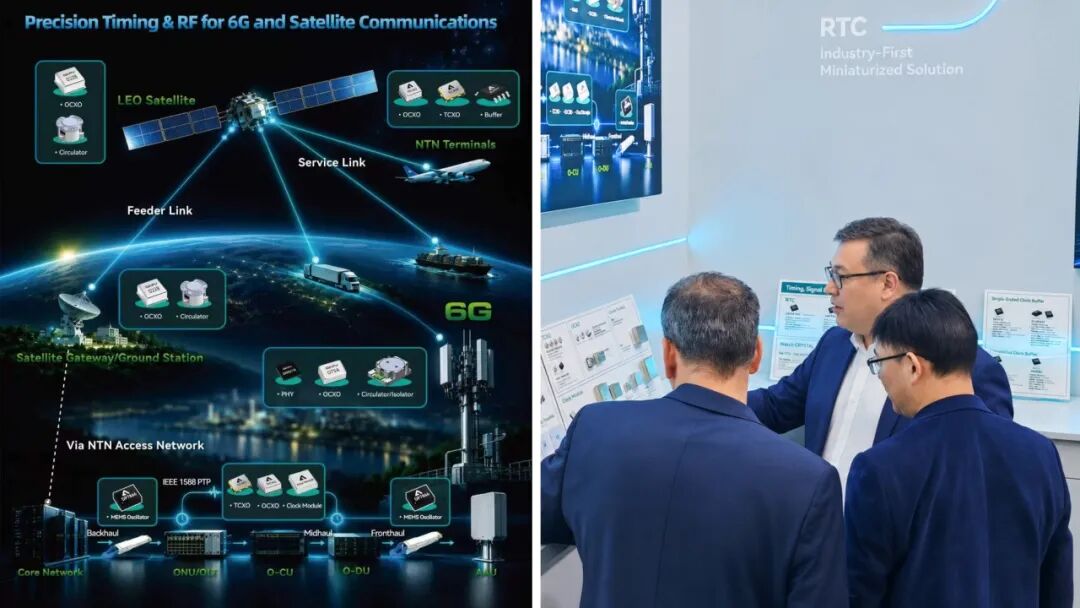
Since its debut at electronica in 2010, Dapu Technologies has actively contributed to the global wireless evolution from 3G to 6G. This year, the company highlighted its miniaturized, low-power O75 and O11 OCXOs, ultra-compact U6G RF circulators (in φ7 mm and 3.8 × 3.8 mm footprints), and integrated clocking technologies for 6G AAUs, accelerating the transition toward integrated space-air-ground 6G networks.
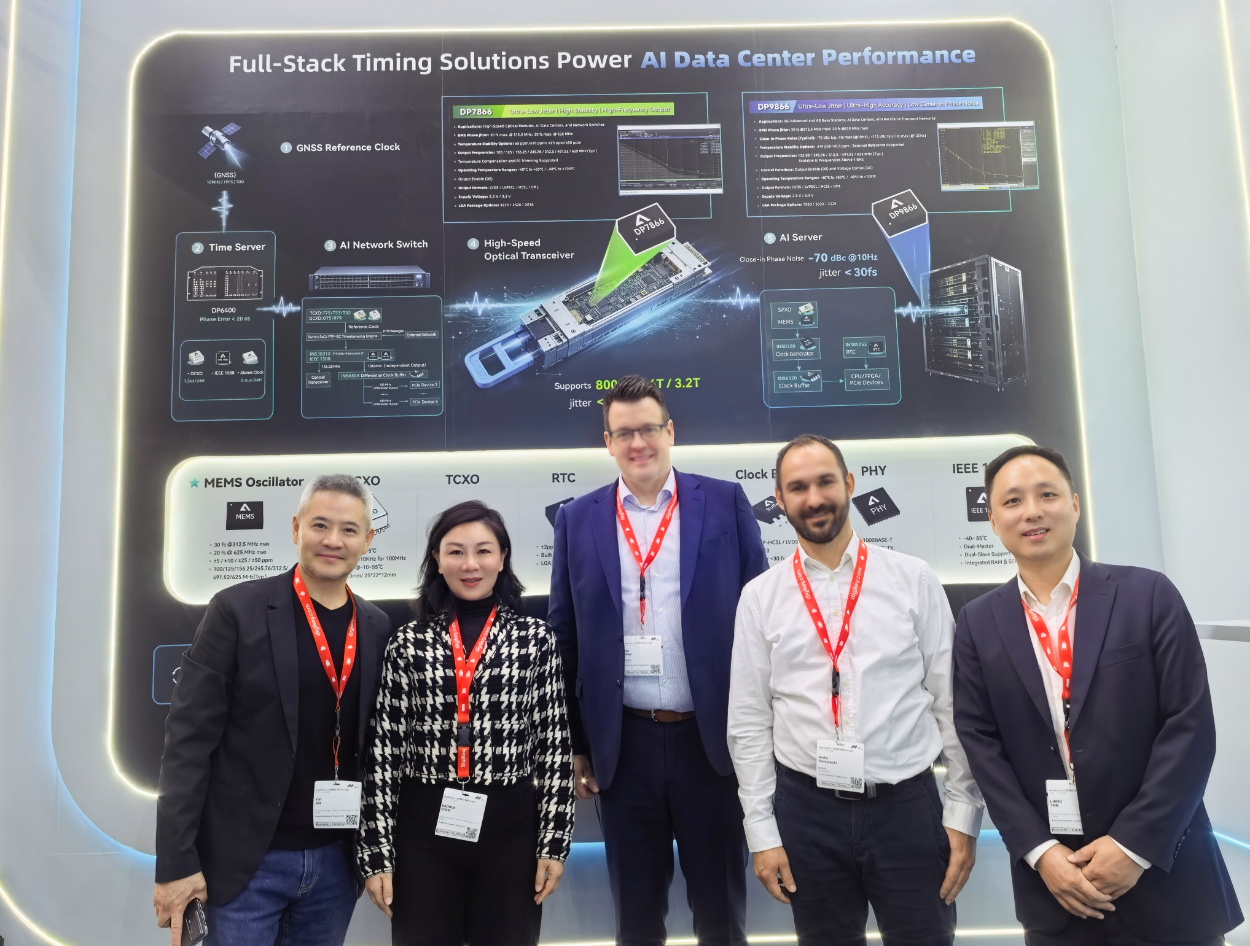
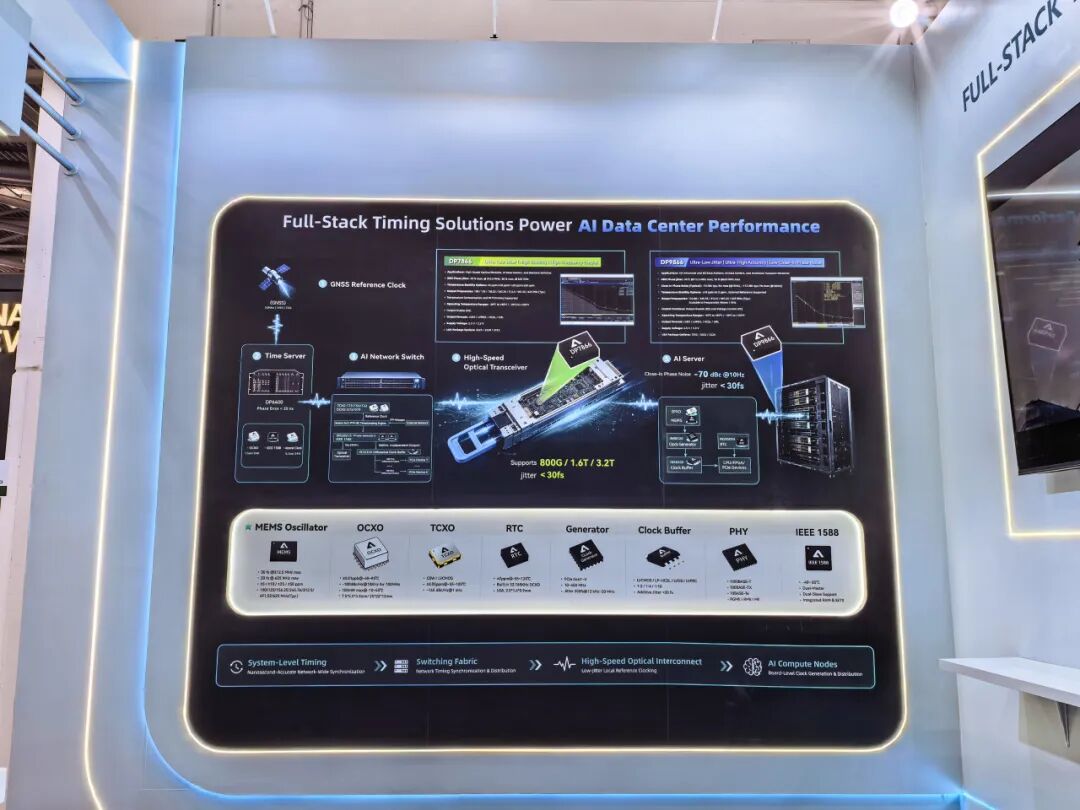
Building on decades of telecommunications expertise, Dapu has extended its capabilities into AI data centers with a full-stack timing portfolio. Covering high-precision timekeeping, synchronization, clock generation, and distribution across the entire link—from time sources and network fabrics to optical interconnects and compute nodes—these solutions provide rock-solid timing for switches, high-speed optical transceivers, and AI servers to unlock maximum cluster performance.
Advancing Physical AI: Accelerating Real-World Deployment
As artificial intelligence expands from the digital realm into the physical world, smart vehicles and embodied robotics have emerged as the primary drivers of "Physical AI."
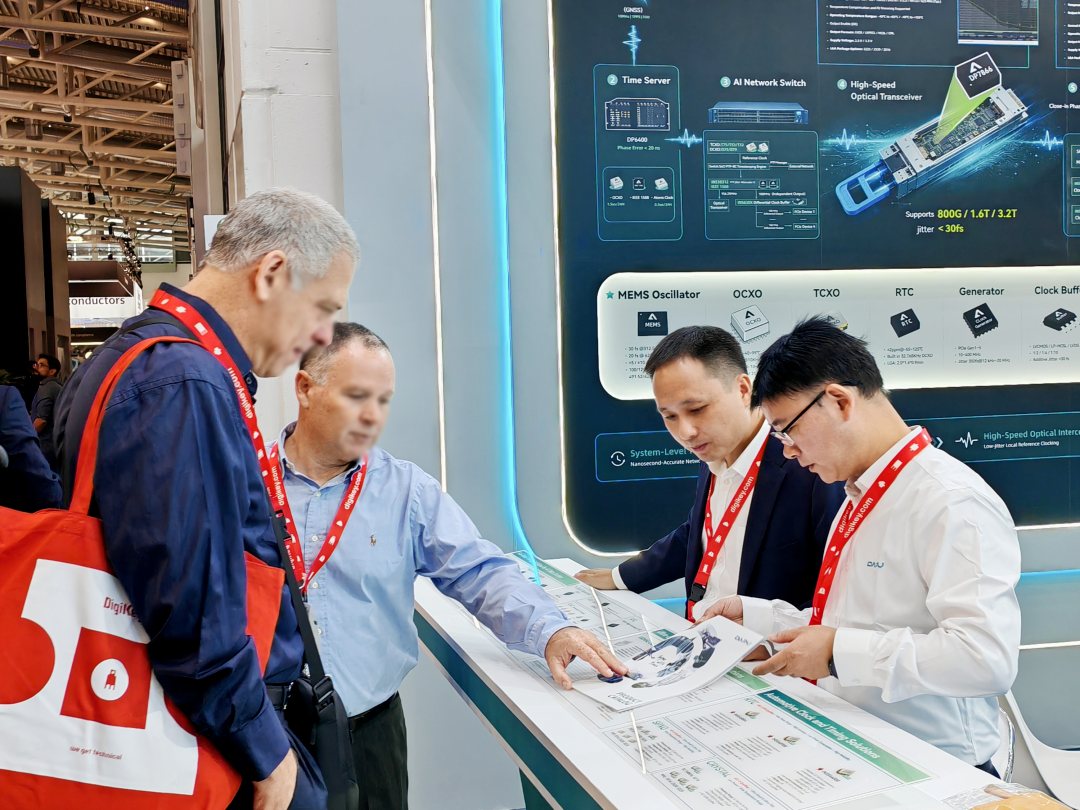
To support automotive intelligence, Dapu presented its full-range automotive portfolio, including RTCs, buffers, clock generators, TCXOs, SPXOs, and crystals. A standout at the booth was the INS5A8900, a dual-clock-source, high-precision RTC featuring automatic primary/backup clock switching, an ultra-low current consumption of 0.55 μA, and full-temperature compensation from −40°C to +105°C (achieving ±5 ppm accuracy from −40°C to +85°C), drawing strong interest from visitors on-site.
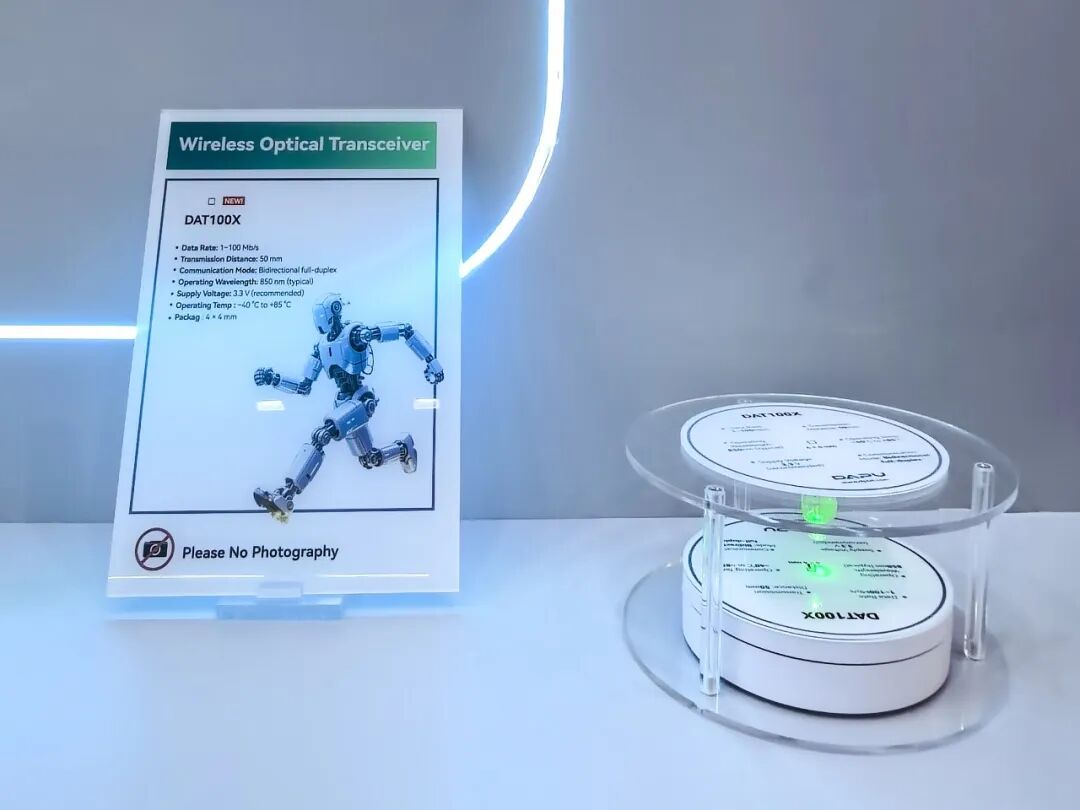
In the field of embodied AI, Dapu showcased the DAT100X contactless optical transceiver IC. Housed in a compact 4 × 4 mm package with a highly integrated optoelectronic architecture, it supports 100 Mb/s to 1 Gb/s bi-directional full-duplex transmission within a 50 mm range, alongside 360° continuous rotational communication. Offering a contactless, wear-free alternative to traditional cables and slip rings, the DAT100X delivers innovative connectivity for robotic joints, gimbals, and rotating machinery.
From precision timing to smart sensing, and from high-speed interconnects to next-generation interaction, Dapu Technologies continues to push technological boundaries—delivering higher accuracy, lower power consumption, and greater reliability to build the foundational timing and sensing infrastructure for a smarter, connected world.